What Documents Should You Request from a Silicone Sealant Manufacturer?
When sourcing silicone sealant from manufacturers, especially for industrial and construction projects, proper documentation is essential for quality verification, regulatory compliance, site safety, and project record-keeping. Many buyers focus only on product price and delivery, but neglect to request critical documentation until problems arise.
This guide explains the key documents you should always request from a silicone sealant manufacturer, what each document contains, and why it matters for your business.
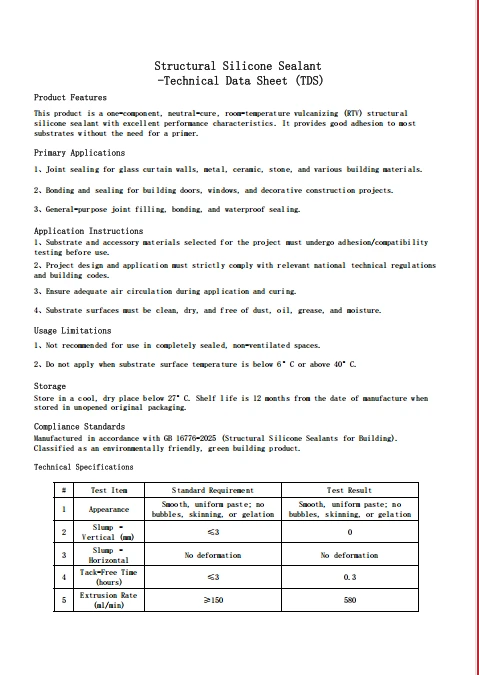
- Technical Data Sheet (TDS)
A Technical Data Sheet is a formal document that outlines the product’s technical specifications, performance properties, and recommended applications.
What it includes: Product description, typical physical properties (tensile strength, elongation, hardness, cure time), movement capability, temperature range, recommended substrates, application instructions, and storage conditions.
Why it matters: It allows you to verify that the product meets your project performance requirements before ordering. It also serves as a reference for on-site application teams.
When to request: Before placing an order, to confirm product suitability. - Safety Data Sheet (SDS)
A Safety Data Sheet (formerly MSDS) provides comprehensive safety, handling, and environmental information for the product.
What it includes: Chemical composition, hazard identification, first aid measures, handling and storage guidelines, personal protection recommendations, spill response, and disposal information.
Why it matters: It is required for regulatory compliance, workplace safety, and transportation. All industrial and construction projects require SDS documentation for on-site chemicals.
When to request: Before the product arrives on site, to ensure proper handling and storage procedures are in place. - Certificate of Analysis (COA)
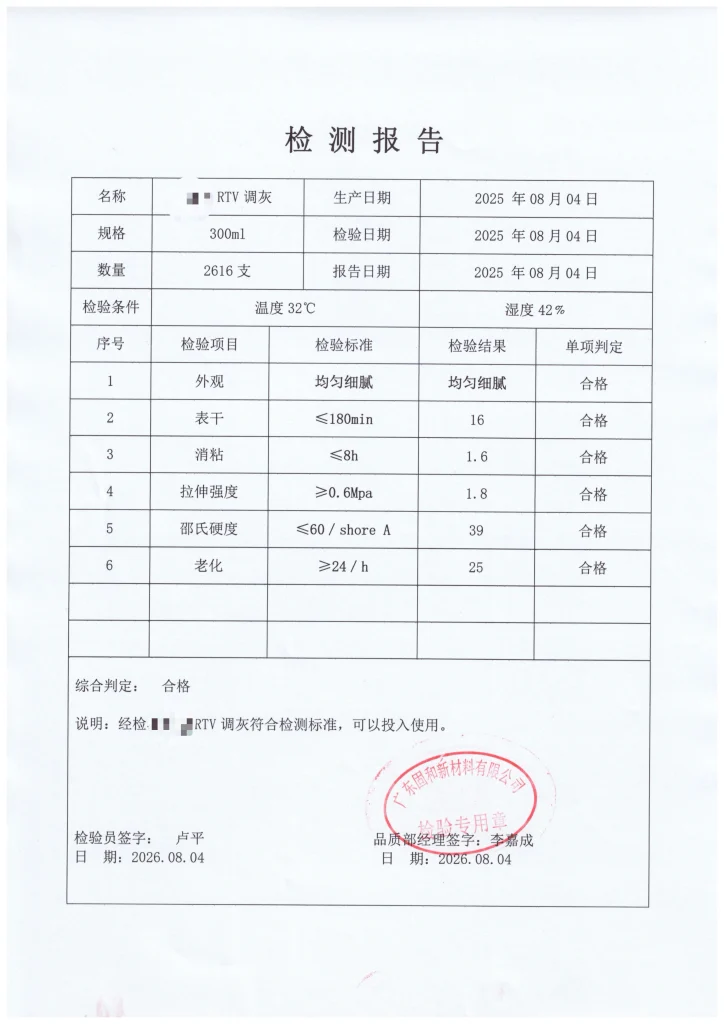
A Certificate of Analysis is a batch-specific document that reports the actual test results for a particular production batch.
What it includes: Batch number, production date, test results for key properties (appearance, hardness, tensile strength, elongation), testing standard, and quality control approval.
Why it matters: Unlike a TDS which lists typical values, a COA confirms the actual quality of the specific batch you are receiving. It is the primary document for quality verification and batch traceability.
When to request: With every shipment. Reliable manufacturers automatically include a COA with each order.
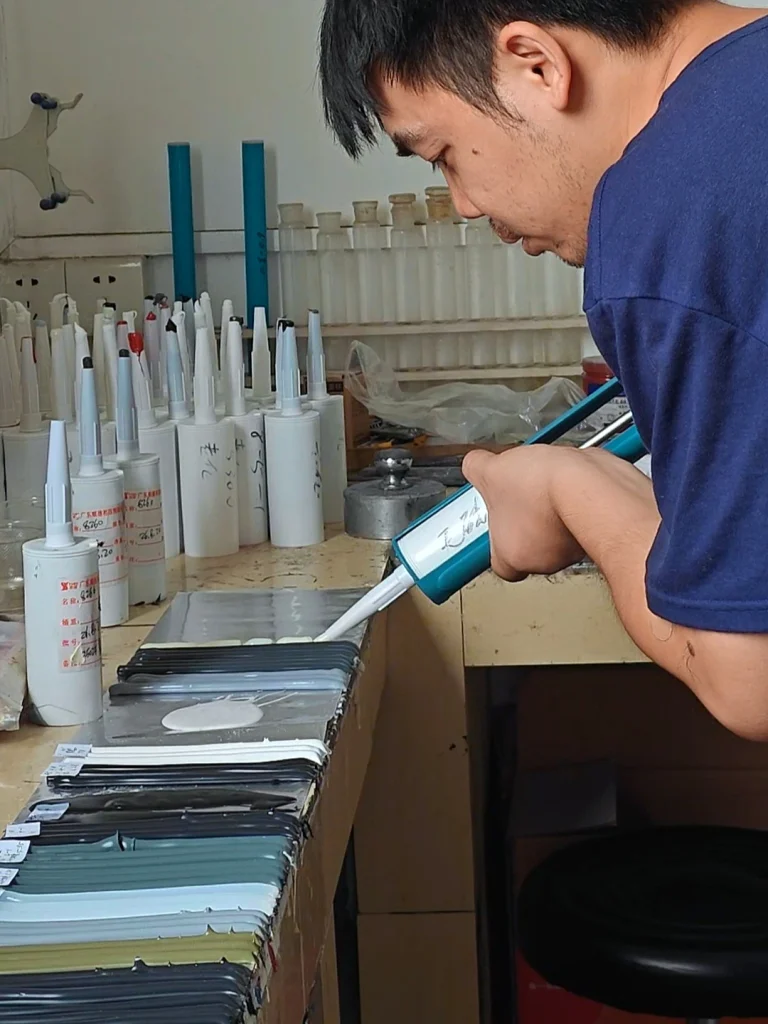
Quality Commitment: Guhe Silicone provides complete documentation with every order. All products come with a TDS, SDS, and batch-specific COA. Our in-house QC laboratory tests every batch according to GB/T 14683 standards before release, ensuring consistent, verifiable quality for every customer. - Certification Documents
These documents verify that the manufacturer and products meet recognized industry and quality standards:
ISO 9001 certificate: Confirms the manufacturer has a certified quality management system.
Product standard compliance: Documents verifying compliance with GB/T 14683, GB 16776, or other applicable standards.
Why it matters: Certifications provide independent validation of the manufacturer’s quality systems and product performance. Many projects require specific certifications as part of tender requirements.
When to request: During supplier evaluation and before entering long-term agreements. - Additional Valuable Documents
Depending on your application, you may also need:
Adhesion test reports: Specific test data for adhesion to your project substrates.
Weathering test data: Accelerated weathering or UV exposure test results.
Application guides: Detailed installation instructions for specific applications.
Product catalogs: Full product range documentation for specification and procurement reference. - Why Documentation Matters for Buyers
Quality assurance: You can verify product performance and batch consistency rather than relying solely on supplier claims.
Regulatory compliance: Many countries and projects require specific documentation for imported chemical products.
Site safety: SDS documents ensure proper handling and protect worker safety.
Problem resolution: If issues arise, documentation helps identify whether the problem is product-related or application-related.
Project records: Formal documentation is required for construction project files and quality audits. - Final Recommendations
Never source silicone sealant from manufacturers that cannot or will not provide proper documentation. The availability of complete, accurate documentation is one of the clearest indicators of a reliable, professional manufacturer.
Make document requests part of your standard procurement process, and verify that the documents you receive are batch-specific and contain actual test data, not just generic marketing claims.
Looking for a silicone sealant supplier that provides complete quality documentation with every order? Contact Guhe Silicone today to request sample documents and product information.