Weatherproofing vs Structural Silicone Sealant: What’s the Difference?
Weatherproofing vs Structural Silicone Sealant: What’s the Difference?
If you’re sourcing silicone sealant for construction, you’ve probably asked: what’s the actual difference between weatherproofing sealant and structural sealant, and what happens if you use the wrong one?
Pick the wrong type, and you’ll get leaks, cracked joints, or even safety risks – especially in hot, sunny, humid places like Nigeria or Brazil. This guide breaks it down in plain terms.
First: What Each One Actually Does
Weatherproofing Silicone Sealant
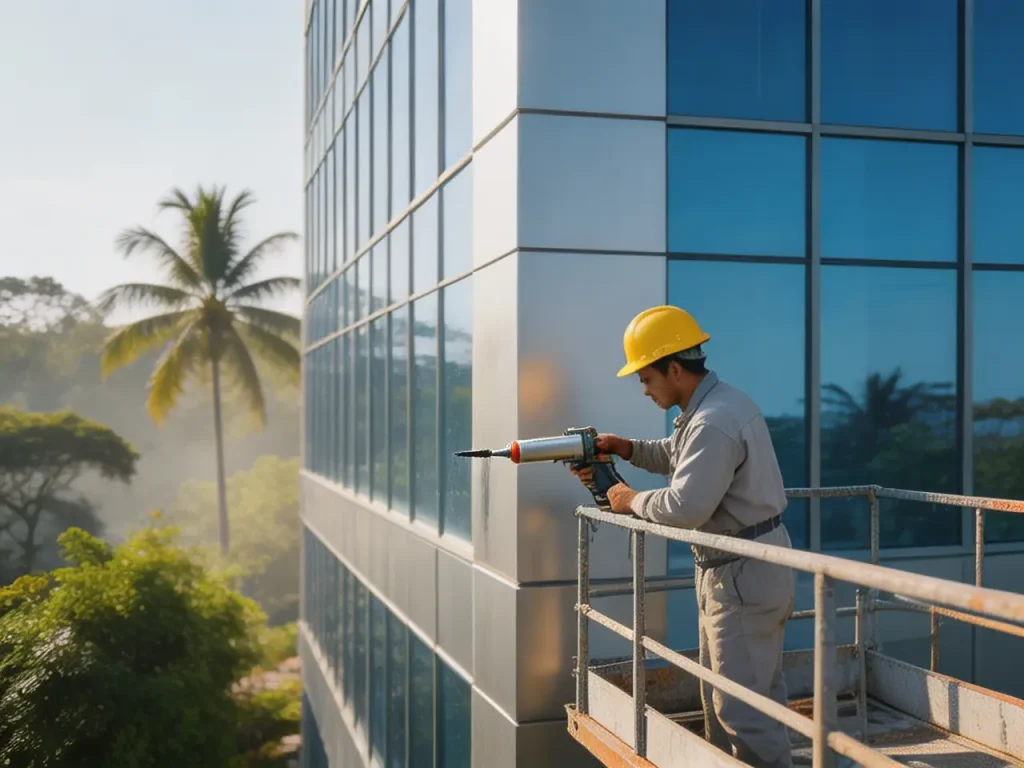
This is the everyday workhorse for building exteriors. It’s made to keep water out, stand up to sun and rain, and flex a little as the building moves.
Where you use it: facade joints, around windows and doors, roof gaps
What it does well: UV resistant, waterproof, lasts for years outside
How much it can move: about ±25%
Structural Silicone Sealant
This is the heavy-duty glue for curtain walls. It actually holds glass to metal frames, replacing screws and brackets. It has to bear weight and handle big movements.
Where you use it: hidden frame curtain walls, big glass facades, structural bonding jobs
What it does well: super strong adhesion to glass and aluminum, very flexible
How much it can move: up to ±50%, meets GB/T 14683 standards
Quick Side-by-Side Comparison
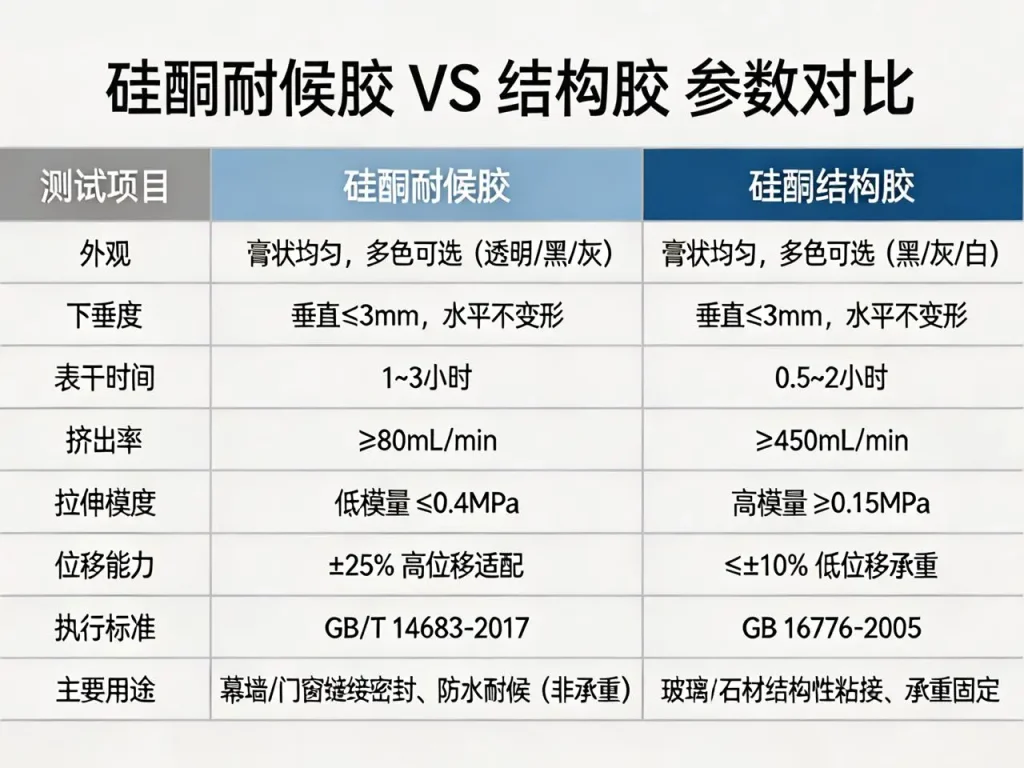
| Weatherproofing Sealant | Structural Sealant | |
| Main job | Keep water and weather out | Bond and hold structural parts |
| Strength | 0.4–0.8 MPa | 1.0–2.0 MPa |
| Flexibility | Moderate | Very high |
| Typical use | Walls, windows, roofs | Curtain wall glass bonding |
| Cost | Mid range | Higher |
How to Pick for Your Project
If you’re working on exteriors in hot, sunny climates (like most of Africa, Southeast Asia, Brazil):
Go with weatherproofing sealant for regular wall and window joints. Look for good UV and mildew resistance.
Only use structural sealant for actual curtain wall glass bonding – don’t try to save money here, it’s a safety issue.
Our GH-980 Weatherproofing Sealant is formulated for tropical climates, and our GH-990 Structural Sealant meets full GB/T 14683 standards for curtain wall work.
Common Mistakes to Avoid
Using weatherproofing sealant for structural bonding – this is a huge safety hazard, don’t do it.
Buying cheap no-brand sealant for exterior use – it will crack and turn yellow in 1–2 years under strong sun.
Using a product made for cool climates in tropical countries – it will fail much faster than advertised.
Need help picking the right one?
If you’re not sure which sealant fits your project, send us a message with your application and location. We can send samples, TDS sheets, and recommend the right product for your climate.
See all our construction sealants or get a free quote