High Temperature Silicone Sealant: Properties, Applications & Selection
High Temperature Silicone Sealant: Properties, Applications & Selection
Your oven seal cracked again. The door does not close tight, heat leaks out, and the repair bill lands on you. Standard sealant cannot take the heat in ovens, stoves and industrial equipment – it hardens, cracks and fails within months.
A high temperature silicone sealant is built for exactly that job. Here is what to check before you buy, so you do not have to redo the seal twice.
- What Makes a Sealant Heat-Resistant?
Silicone rubber is naturally more heat-tolerant than most polymers, but the final temperature rating depends on the formulation:
Base polymer quality – high-grade silicone polymers keep their elasticity at high temperatures.
Fillers and additives – heat-stabilizing additives prevent hardening and cracking.
Cure chemistry – neutral-cure high-temp grades keep their bond strength under thermal cycling.
A genuine high temperature silicone sealant stays flexible, keeps adhesion and does not turn brittle when exposed to repeated heating and cooling.
2. Continuous vs Intermittent Temperature Rating
Manufacturers quote two numbers – know the difference:
Continuous service temperature: the temperature the sealant can handle for long periods without losing performance. For high temperature silicone, this is typically 280°C.
Intermittent / peak temperature: the maximum the sealant can survive for short periods. A good high-temp grade can take 320–350°C peaks.
Check both numbers against your real application. An oven seal that sees 250°C all day needs a continuous rating of at least 250°C, not just a peak rating.
3. Key Applications
High temperature silicone sealant is used wherever heat, sealing and bonding meet:
Ovens, stoves and cookers – sealing panels, joints and glass in kitchen appliances.
Range hoods and exhaust systems – high-heat sealing that must not soften or drip.
Industrial equipment – kilns, furnaces, boilers, heat exchangers.
Engines and machinery – gasketing and sealing where engine heat is extreme.
Lighting and heating elements – bonding and sealing around hot components.
4. How to Select the Right Grade
When comparing high temperature silicone sealants, check these points:
Temperature rating. Match the continuous rating to your worst-case service temperature, with margin.
Cure type. Neutral-cure grades are safe on metals and electronics.
Adhesion. Confirm performance on your substrate: metal, glass, ceramic, plastic.
Heat-aging stability. The product should stay flexible after weeks at high temperature, not harden or crack.
Documentation. For OEM and export work, ask for the TDS with full temperature and mechanical data, plus batch COA.
5. Product Highlight: GH-880 from Guhe Silicone
Guhe GH-880 High Temperature Silicone Sealant is a one-component, neutral-cure, room-temperature vulcanizing sealant designed for high-heat equipment.
Key values:
- Service temperature: -60°C to +280°C (peaks up to 350°C)
- Tack-free time (25°C): 10–20 minutes
- Shore A hardness: 30–50
- Tensile strength: ≥1.5 MPa
- Pressure resistance: ≥12 MPa at room temperature
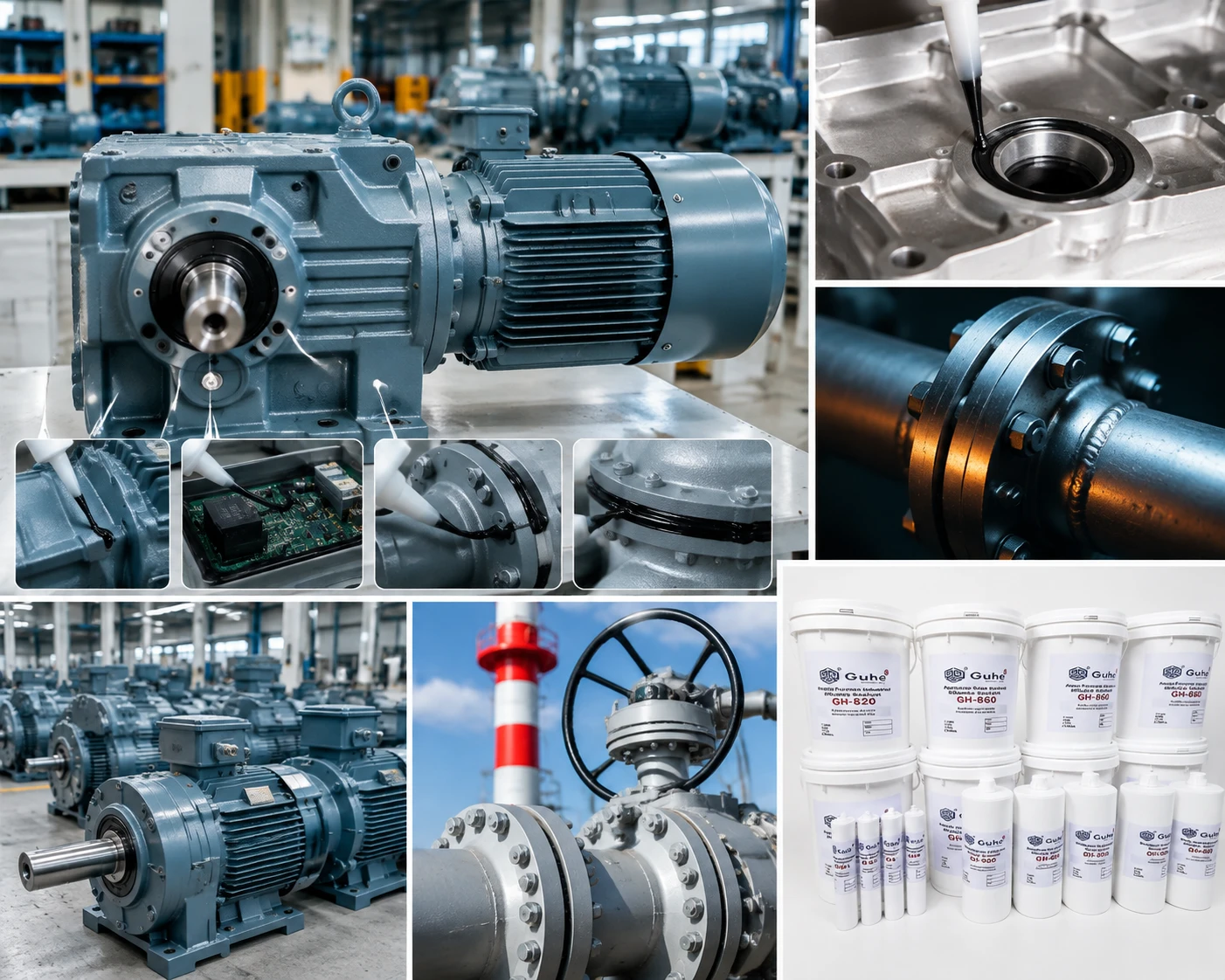
It is eco-friendly, solvent-free, has good thixotropy, and can be applied without primer. Available in 300ml cartridges, 2.6L cartridges, 20L drums and 200L steel drums.
6. Common Mistakes to Avoid
Using a standard building sealant on hot equipment – it degrades, cracks and leaks within months.
Ignoring the difference between continuous and peak rating.
Applying on hot surfaces – always apply at room temperature and let it cure first.
Buying without a TDS – you cannot verify the real temperature rating without the data sheet.
Need a high temperature silicone sealant for your equipment or OEM project? Contact us for samples, TDS and bulk pricing.
FAQ
Q: What temperature can high temperature silicone sealant withstand?
A: A good grade like Guhe GH-880 handles continuous service from -60°C to +280°C, with peaks up to 350°C.
Q: Can I use it to seal my oven?
A: Yes. It is designed for ovens, stoves, range hoods and exhaust systems that see high continuous heat.
Q: What is the difference between continuous and peak temperature rating?
A: Continuous rating is the temperature the sealant endures for long periods; peak rating is what it survives for short bursts. Always match the continuous rating to your real service temperature.
Q: Does GH-880 need a primer?
A: No. It can be applied without primer on clean surfaces, and it is solvent-free.
Q: What packaging is available?
A: 300ml cartridges, 2.6L cartridges, 20L drums and 200L steel drums.